
Technical handover
We assess the code, documentation and available environments. We identify gaps and the conditions under which we can take over the application.
Code · Access · Documentation
Maintenance and evolution
We assess the application, organise support and plan updates and new developments. For companies that need clear responsibilities after launch or a team to take over an existing application.
Starting with a technical assessment, we agree the applications, components and support hours together.
We assess the code, documentation and available environments. We identify gaps and the conditions under which we can take over the application.
Code · Access · DocumentationWe define what to monitor, how incidents are classified and the process for response and communication.
Alerts · Escalation · ResponseWe plan fixes, updates and new features in a backlog prioritised with your team.
Updates · Testing · Ongoing developmentWe clarify what we are taking on and who is responsible. Response times, coverage and priorities are agreed to suit the application.
We clarify access, applications and responsibilities.
We agree priorities, communication and response procedures.
We review requirements regularly and deliver improvements.
At every stage, we consider
How we assess progressWe track recurring incidents, agreed response times and the stability of released changes.
More about how we workExample solutions
Three common situations and how we can approach them. Choose the example that feels familiar.
Technical handover and a clear starting point
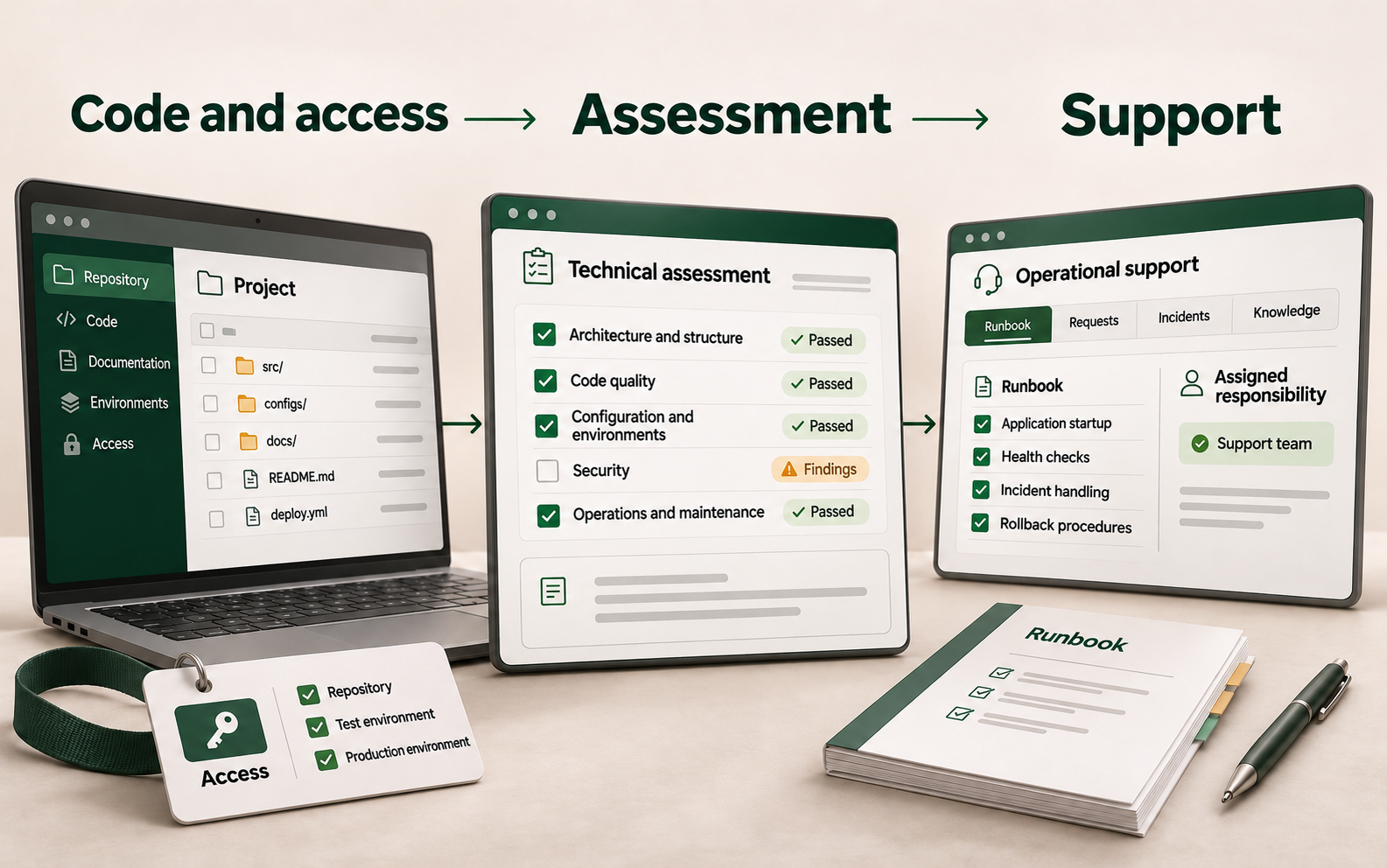
We document gaps, responsibilities and stabilisation steps.
What we build
We assess the code, infrastructure and available documentation. We identify gaps, establish access and document essential operating procedures.
What changes
It becomes clear what can be taken on, what needs stabilising and who is responsible.
Monitoring and a structured response
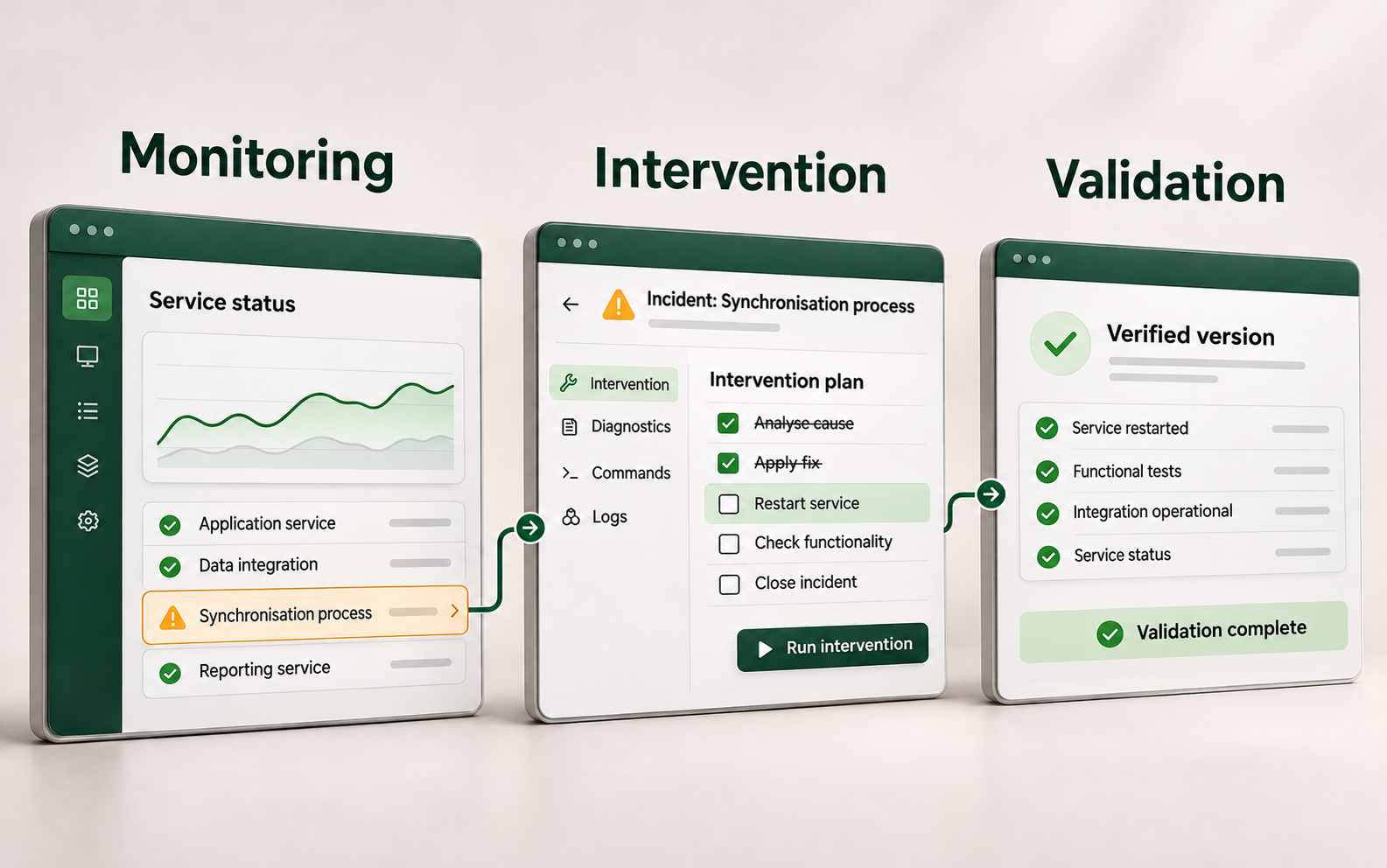
Incidents are classified, communicated and tracked through to resolution.
What we build
We define what to monitor, how incidents are classified and who they are escalated to. We prepare relevant alerts and procedures for recurring problems.
What changes
The team has visibility into incidents and a shared approach to responding.
A shared plan for maintenance and ongoing development
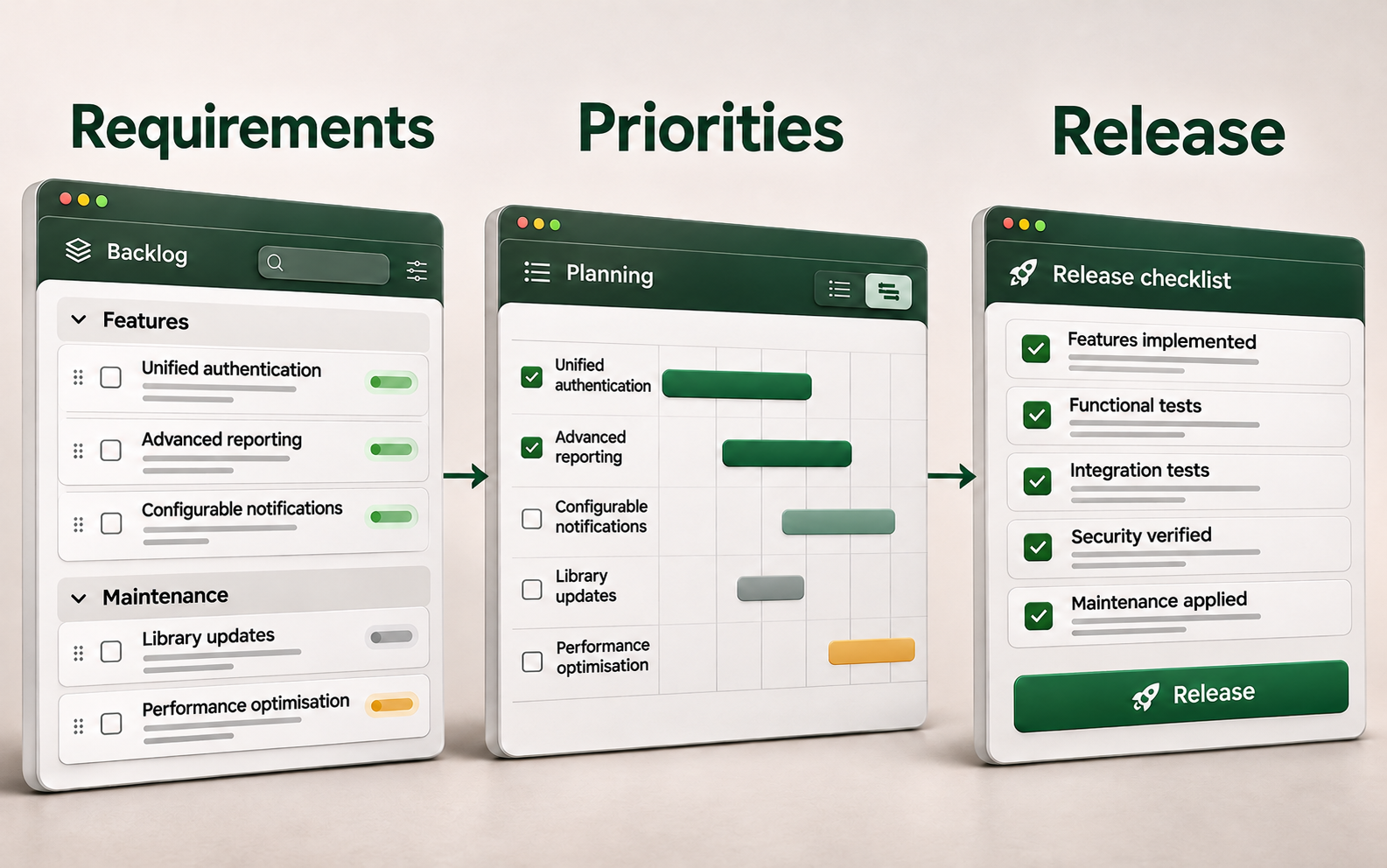
Impact and dependencies determine the order of changes.
What we build
We assess impact and dependencies, then prioritise a shared backlog. We schedule updates, testing and releases within agreed windows.
What changes
Technical changes and business requirements have explicit priorities and steps.
Explore your industry context
Application handovers, support levels and development priorities.
We can assess a handover after a technical review and confirmation of access to the code, documentation and infrastructure.
Support levels, coverage hours and response times are defined contractually, according to the application and your company's requirements.
We agree a shared backlog and review it based on impact, dependencies and implementation capacity.
We begin by assessing the application and how it is operated.
We clarify what is critical to the business, what access is available and where the dependencies lie. This forms the basis for the handover, coverage and support responsibilities.
ContactFor our first conversation, it helps to have
Do not have all the answers yet? We will work through them together.