
Procedure assistants
Conversational access to approved documents, with sources users can check and role-based permissions.
Procedures · Search · Sources
Financial services
When a request passes through several teams, documents and systems, every step matters. We build internal applications, integrations and assistants that help people work with a shared context.
Software projects for
 BRD Groupe Société Générale
Banks · Fintech · Financial services. Solutions shaped by day-to-day work.
Conversational access to approved documents, with sources users can check and role-based permissions.
Procedures · Search · SourcesDocument collection, checks and routing between teams, with statuses and a history for every case.
Documents · Checks · ApprovalsInformation exchange between systems, with consistency checks and visible exceptions.
Synchronisation · Reconciliation · ExceptionsFrom our portfolio
BRD Groupe Société Générale
A conversational assistant connected to knowledge-base materials, enabling people to find information through natural-language questions.
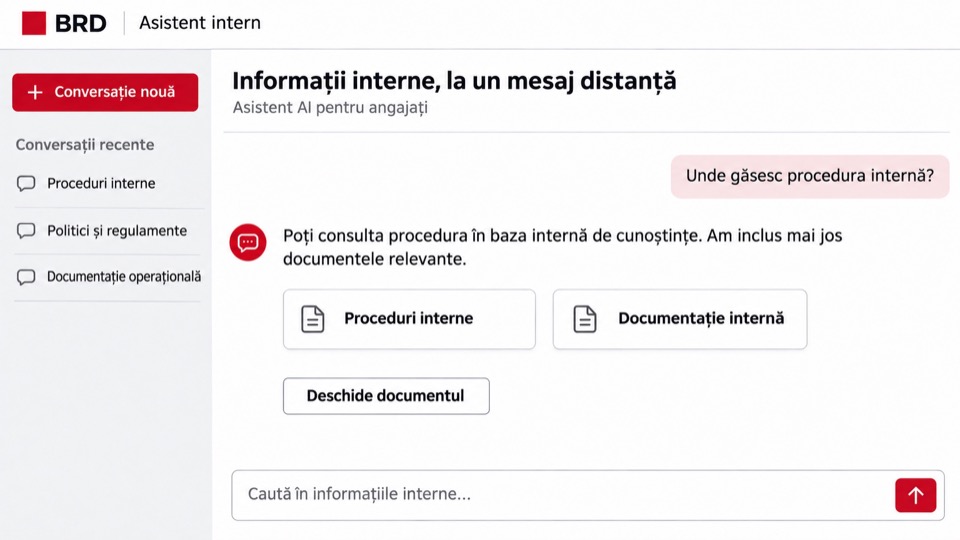
What we delivered
We start with a specific situation in your organisation. We assess what can be connected, what needs to be built and how to evaluate the first version.
We choose a frequently used procedure or a single type of request. We clarify the sources, roles and exceptions.
We scope the first version and test it with the people who will use it, covering both everyday scenarios and exceptions.
We prepare for day-to-day use, provide documentation and define the next steps around the team's priorities.
Example workflow · Financial services
The same request and history, from one team to the next.
Example solutions
Three common situations and how we can approach them. Choose the example that feels familiar.
Assistant for procedures and internal knowledge
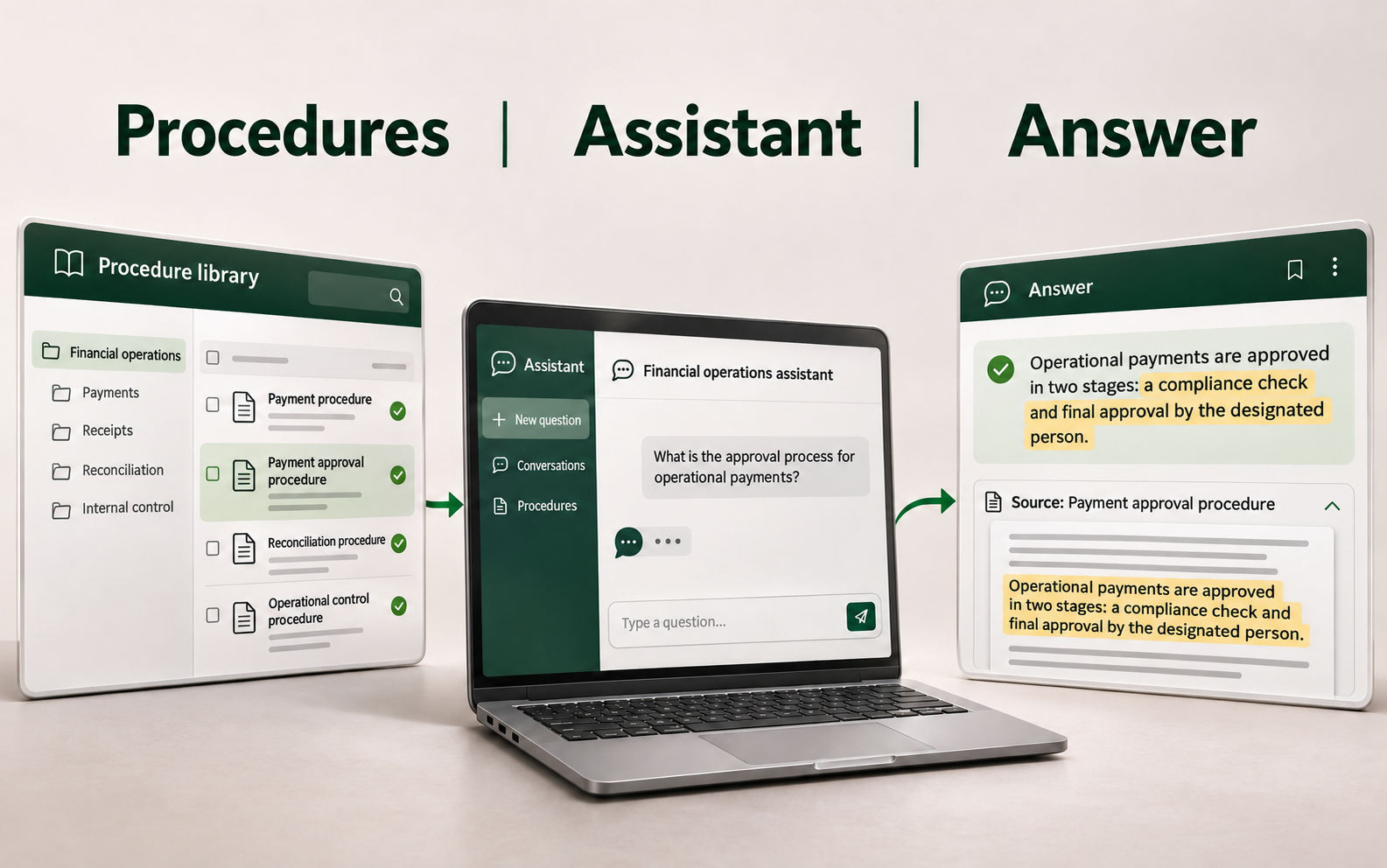
Users can consult the document behind an answer.
What we build
We can connect approved documents to a question-and-answer interface, with sources users can check, role-based access and an agreed evaluation set.
What changes
A starting point for the team's questions, with the relevant document one click away.
Portal for requests and documents
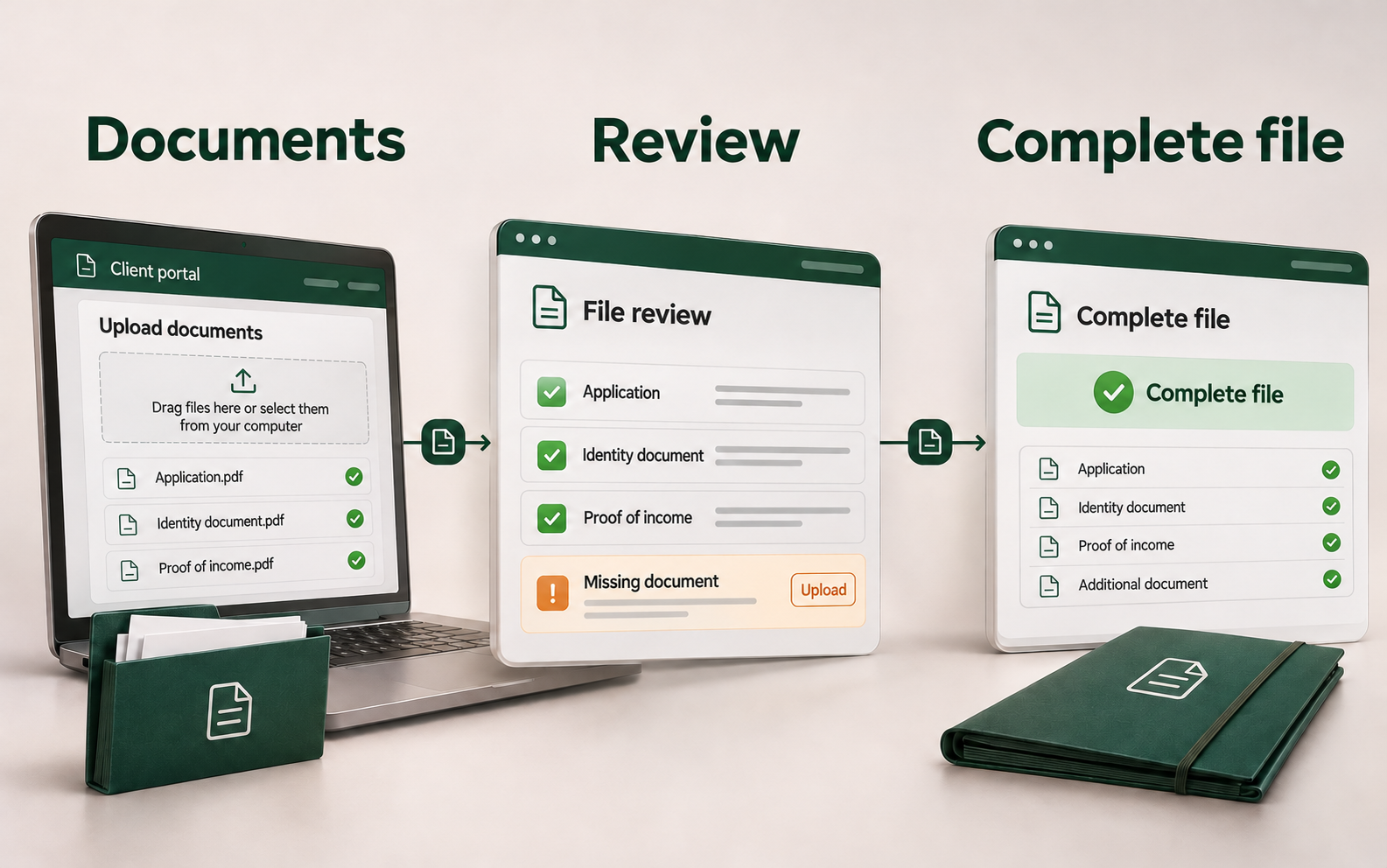
Missing documents are requested within the same case.
What we build
We can build document collection, checklists, statuses and routing to the responsible team. Checks and approvals remain in the request history.
What changes
Visibility of progress and a shared process for additional information and checks.
Integration and validation between systems
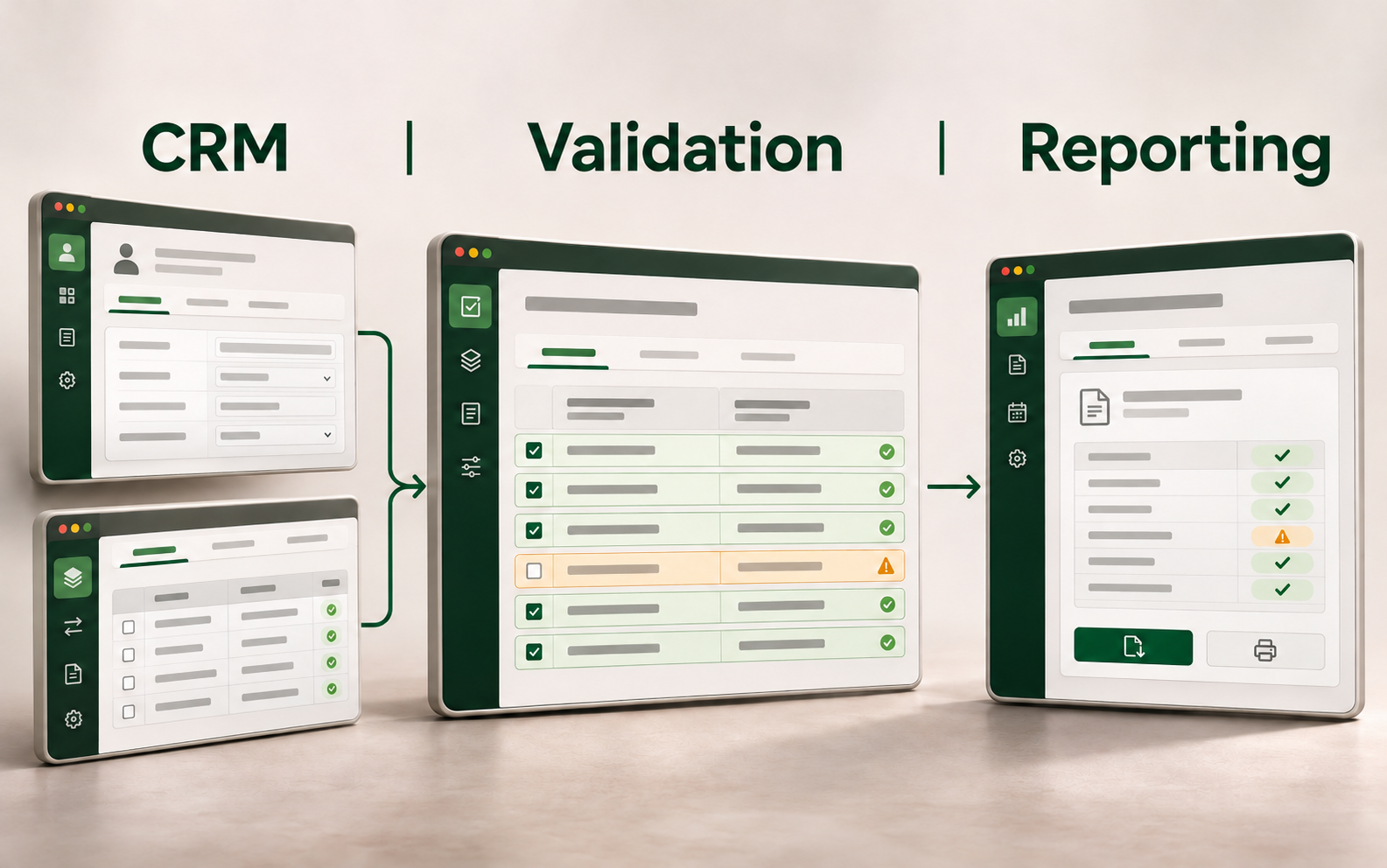
Discrepancies are added to a review list.
What we build
We can define mappings, synchronisation and consistency checks, with an explicit list of exceptions for the operations team.
What changes
A view of transferred data and the discrepancies that need investigation.
A few things to clarify before the first stage.
Yes. We define the process, users and sources for a pilot. Expansion is decided after reviewing usage and results.
We map roles with the client's team and check access both within the application and at the integrated sources. These rules form part of the test scenarios.
A frequently used procedure or a single type of request.
We scope the first version, check dependencies and validate it with the people who will use it. This helps us decide what is worth expanding.
ContactFor our first conversation, it helps to have
Do not have all the answers yet? We will work through them together.