UP2DATE Contact
Two engineers reviewing an application's code and behaviour together

AI Trust

We review your application. We clarify the risks.

Do you have an application built with Lovable, Cursor, Claude Code or another AI tool? The UP2DATE team assesses it, fixes issues and documents the risks so you can decide what to do next.

Five services to suit your situation

Where do you need clarity?

Before launch, when your application has problems or when you want to stay in control of changes.

01 · Before launch

AI Software Audit

You have an application built with AI and want a technical assessment before investing further or launching it.

What is included and what you receive

When it makes sense

  • The prototype works, but you do not know how robust it is.
  • You want to launch or add users and integrations.
  • You need a second opinion on the code and architecture.

What we check or fix

  • Code and maintainability — Structure, duplication, error handling and the ability to change the application without regressions.
  • Security and access — Authentication, authorisation, secrets and data separation between users.
  • Architecture — Component responsibilities, dependencies and scaling limits.
  • Databases — Data models, integrity, queries and migrations.
  • APIs and integrations — Request validation, access rights, errors and external dependencies.
  • Performance and operations — Bottlenecks in agreed scenarios, tests, configuration and visibility into errors.

What you receive

  • A diagnosis: what works and where the problems are.
  • A prioritised risk register, with evidence and impact.
  • A remediation plan and recommendations for the next stage.
  • A findings presentation for the technical team and decision-makers.

The audit assesses the agreed scope. Code fixes and extended retesting are quoted separately; the report does not guarantee the absence of all issues.

Contact us about AI Software Audit
02 · Your application has problems

AI Software Rescue

Errors, vulnerabilities or scalability problems. We work on the existing application and prepare a version for production.

What is included and what you receive

When it makes sense

  • Changes fix one error and introduce others.
  • The application exposes data or has access-control problems.
  • The prototype cannot cope with real-world use.

What we check or fix

  • Initial diagnosis — Reproducing errors, assessing impact and setting priorities before making changes.
  • Vulnerability remediation — Fixes for confirmed access-control, validation and data-protection issues.
  • Targeted restructuring — Separating fragile components and clarifying dependencies.
  • Data and integrations — Correcting affected workflows, queries and APIs.
  • Regression tests — Checks for resolved issues and agreed critical functions.
  • Release preparation — Configuration, migrations, monitoring and a rollback plan for delivery.

What you receive

  • Remediated code, with documented changes.
  • Tests and results for the agreed scenarios.
  • A release plan and a plan for reverting to the previous version.
  • A technical handover and a list of remaining risks.

We establish what can be recovered and when a component needs rebuilding. Release follows agreed acceptance criteria. Incident availability and subsequent support are contracted separately.

Contact us about AI Software Rescue

03 · Agents that take action

AI Agent Security Assessment

We assess AI agents that read data, send messages or modify systems. We check permissions and controls over their actions.

What is included and what you receive

When it makes sense

  • The agent accesses databases or internal documents.
  • It can send emails, modify records or call APIs.
  • You want to check the controls before extending its autonomy.

What we check or fix

  • Permissions and identity — Each tool's access, read and write permissions, and the identity on whose behalf it acts.
  • Instruction manipulation — Controlled prompt-injection scenarios through messages, documents or external results.
  • Data protection — Permitted sources, separation of contexts and potential routes for information exposure.
  • Action approval — Independent checks on recipients, parameters and operations with an impact.
  • Audit trails — What is recorded, how an action can be explained and how an incident can be investigated.
  • Stopping and recovery — Execution and cost limits, error handling and operator intervention.

What you receive

  • A map of agents, tools, permissions and data.
  • Tested scenarios, results and evidence of issues.
  • Recommendations for access, approvals and monitoring.
  • A remediation plan and criteria for retesting.

We test only authorised agents, tools and environments. The assessment is technical and context-specific; it does not promise that the agent will be immune to manipulation in every situation.

Contact us about AI Agent Security Assessment

04 · Recurring checks

Continuous Software Assurance

After an audit or remediation, we periodically review significant changes, security and application dependencies.

What is included and what you receive

When it makes sense

  • Your team frequently delivers code, including code generated with AI.
  • You want an additional review of high-impact changes.
  • You need visibility into recurring issues.

What we check or fix

  • Code review — Reviewing significant changes against agreed criteria.
  • Security checks — Periodic testing of the scenarios included in the subscription.
  • Dependencies — Tracking known vulnerabilities and prioritising updates.
  • Evolving architecture — Assessing the impact of new integrations and components.
  • Checking fixes — Retesting remediated issues and updating the risk register.
  • Periodic reporting — Findings, progress and priorities for the next period.

What you receive

  • A recurring review schedule and scope of work.
  • Documented feedback on reviewed changes.
  • An updated risk and dependency register.
  • A periodic report and a prioritisation discussion.

The subscription specifies frequency, capacity, response times and what is included. It does not automatically include 24/7 monitoring, unlimited remediation or a response to every incident.

Contact us about Continuous Software Assurance

05 · Independent assessment

Software Risk Assessment

A documented technical assessment for companies buying software and insurers evaluating a supplier.

What is included and what you receive

When it makes sense

  • You want to buy or take over an application developed with AI.
  • You are assessing a software supplier for your company.
  • You need technical evidence for an insurer's risk assessment.

What we check or fix

  • Architecture and dependencies — Critical components, external services and points of supplier dependency.
  • Application security — Access controls and information protection within the agreed scope.
  • Code quality and provenance — Maintainability, documentation and available records about components.
  • Operations and continuity — Release, backup, recovery and operational responsibilities.
  • Evidence and limitations — Traceability of findings, access provided and checks that could not be performed.
  • Impact on the decision — Technical risks, recommended measures and questions to clarify with the supplier.

What you receive

  • An independent technical report with scope, methodology and limitations.
  • A risk register with evidence and potential impact.
  • A list of unverified information and important dependencies.
  • Recommendations and a clarification session with the agreed parties.

We do not issue official certifications or guarantee acceptance by an insurer. The report supports technical assessment; the purchasing, insurance or underwriting decision rests with the responsible organisation.

Contact us about Software Risk Assessment

Who AI Trust is for

We start with the application you have and the decision you need to make.

Founders with an AI-built prototype

You have built with Lovable, Cursor or Claude Code and want to understand what needs checking before launch.

Audit · Remediation

Teams delivering with AI

Your application changes frequently, or your agents have access to data and tools. You need clear checks and boundaries.

Agent security · Recurring checks

Companies evaluating software

You are buying an application, taking over a product or assessing a supplier. You need evidence to evaluate the risk.

Technical assessment · Documented risks

From the first conversation to a practical plan

We agree the scope of work and the access required. We link conclusions to evidence and the scenarios checked.

We define the assessment

We clarify the application, the objective and what we can access. We agree the scope, deliverables, timeline and cost.

  • Scope, access and authorised environments
  • Agreed deliverables, timeline and cost

We work from evidence

We analyse the code and configuration, then check the agreed scenarios. Tests take place within authorised environments and limits.

  • Tested scenarios and technical evidence
  • Documented findings and limitations

We explain the next step

We present our conclusions and priorities. Remediation and periodic checks are agreed separately, if you need them.

  • Prioritised risks and recommendations
  • Remediation steps and retesting criteria

At every stage, we consider

  • Agreed scope of work
  • Evidence-backed conclusions
  • Risks and limitations explained
More about how we work

Examples of checks

What do we actually check?

Three common situations and how we can approach them. Choose the example that feels familiar.

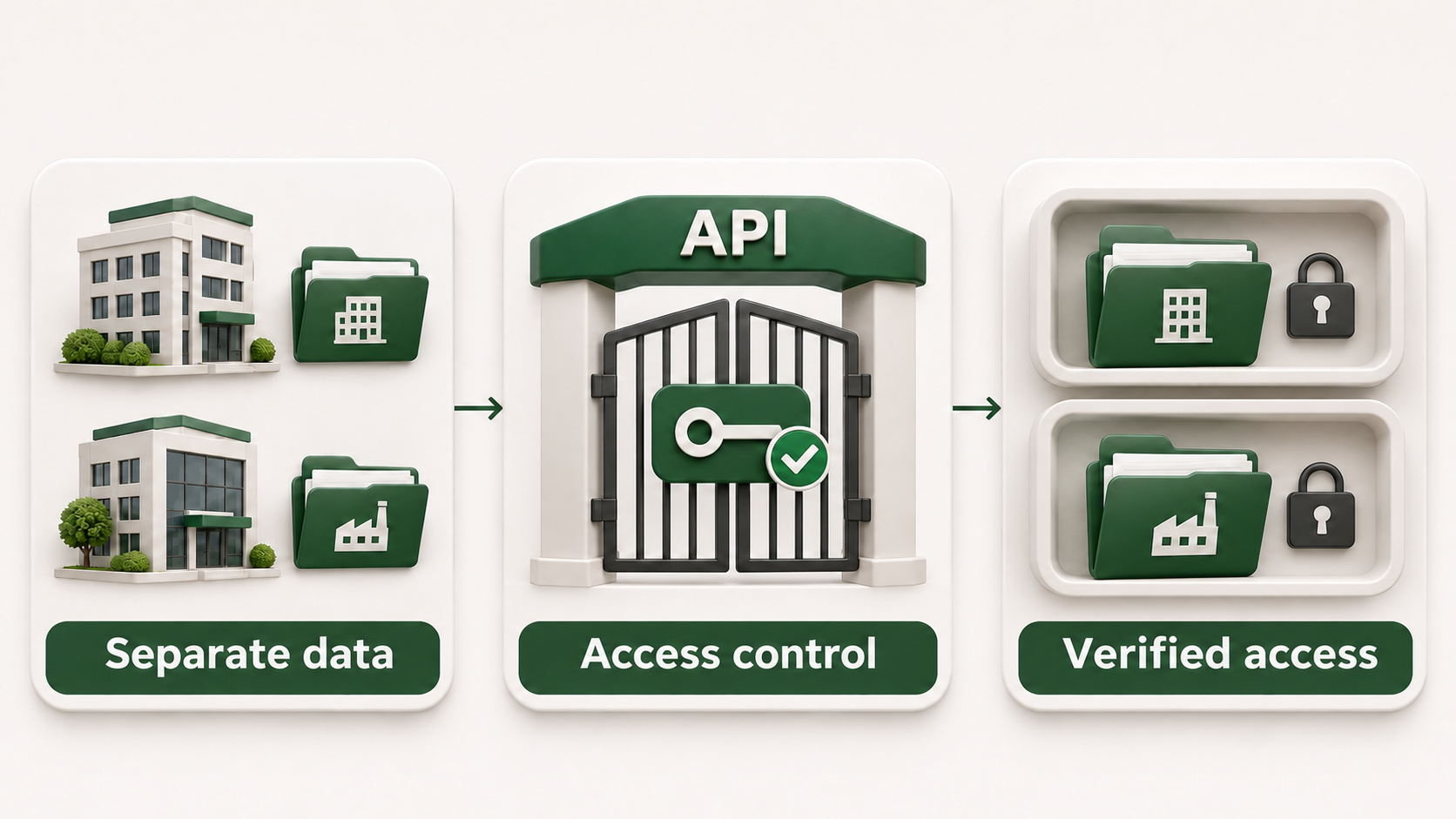
Overly broad data access

A user can request data belonging to another organisation through the API.

Solution illustration: Each organisation's data stays separate. Separate data → Access control → Verified access.
Each organisation's data stays separate

An example check. The scope and fixes are defined for your application.

What we check and correct

Server-side permission checks and tests for isolation between organisations.

What changes

Permissions are checked on the server, and data isolation is covered by tests.

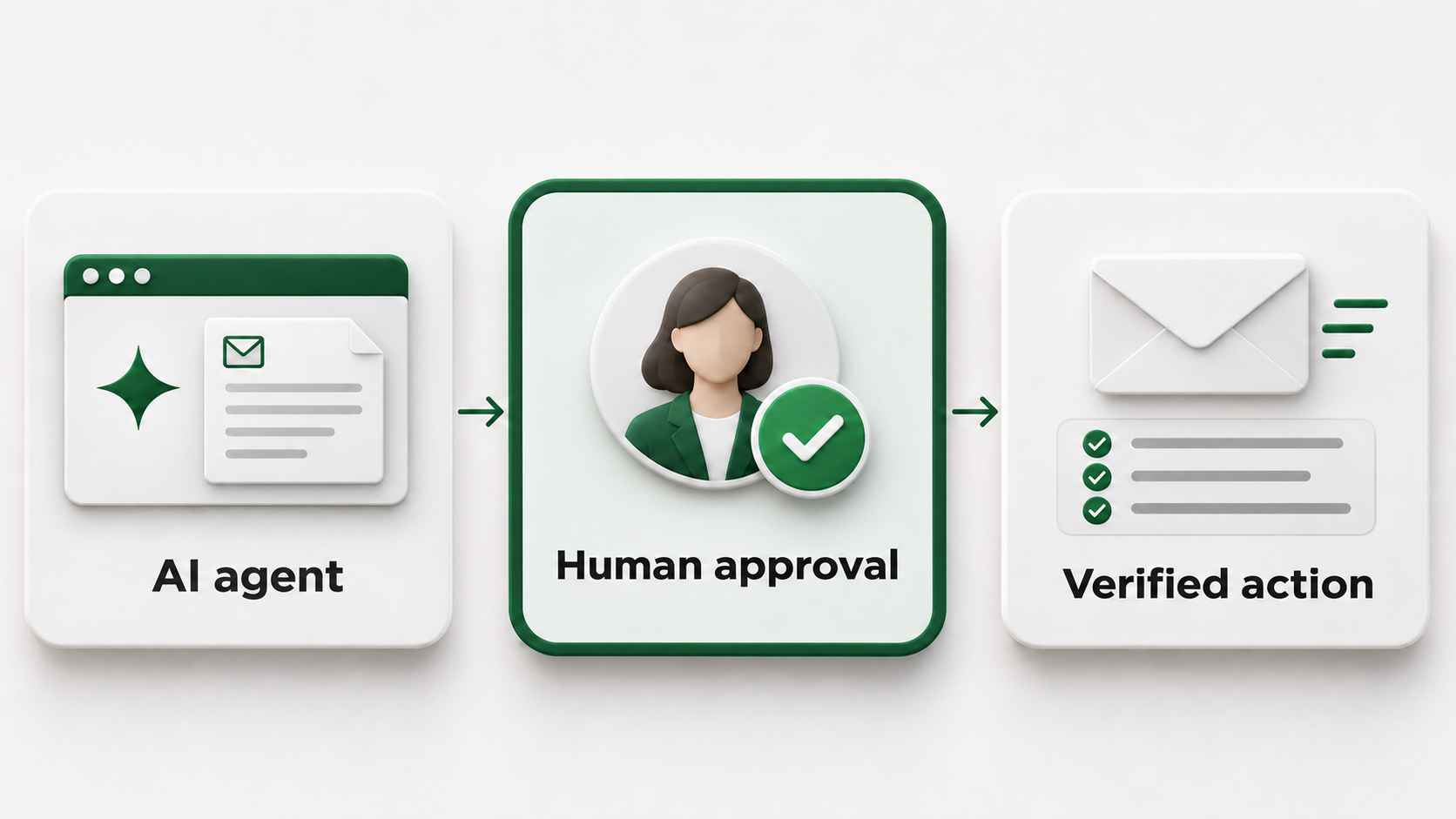
Actions without approval

The agent can send an external email without a separate check of the recipient and content.

Solution illustration: The agent proposes. A person approves. AI agent → Human approval → Verified action.
The agent proposes. A person approves.

An example check. The scope and fixes are defined for your application.

What we check and correct

Limited permissions and verified approval before sensitive actions.

What changes

Sensitive actions have limited permissions, approval and audit trails.

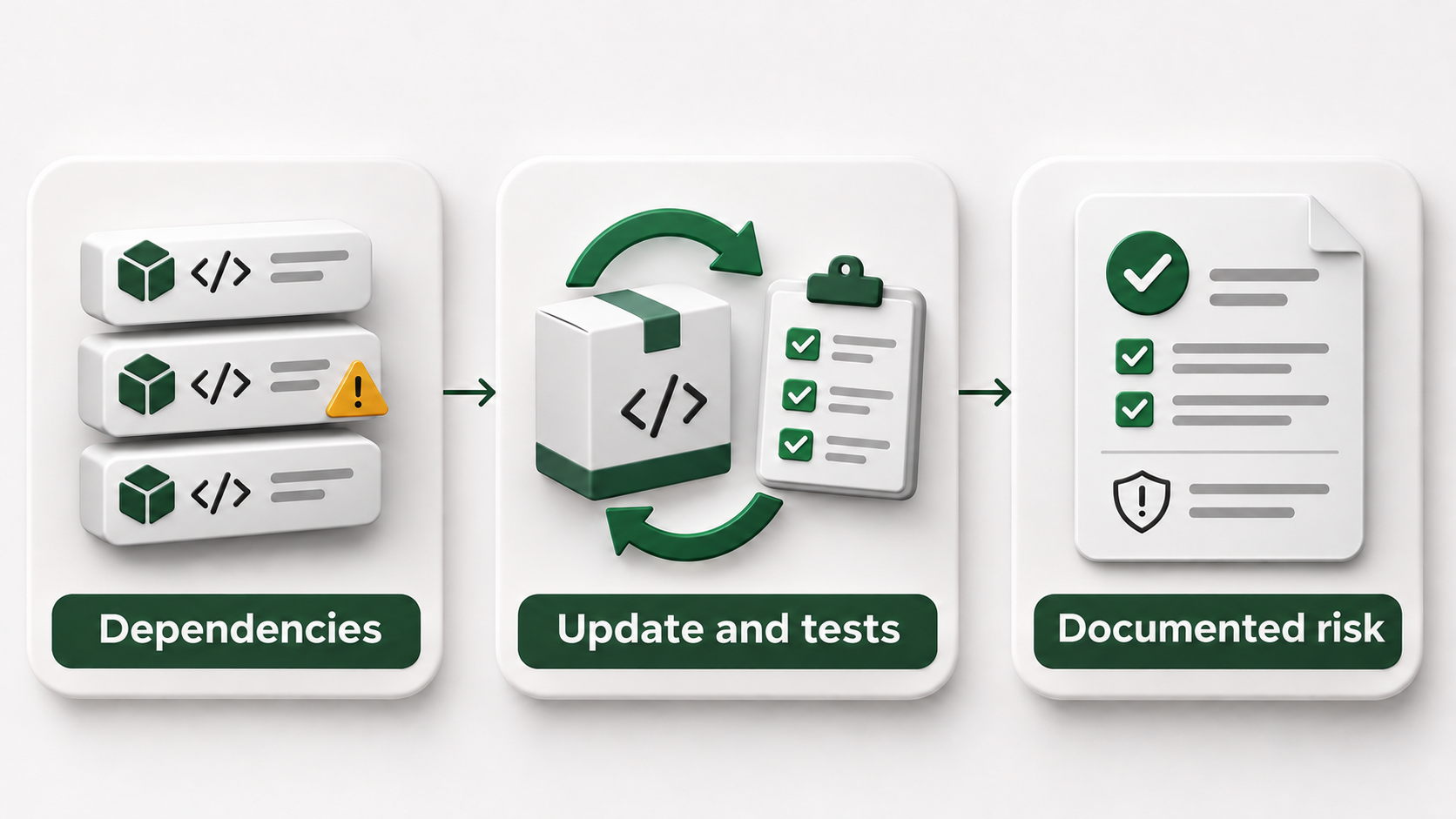
A vulnerable dependency

The application uses a version with a known vulnerability. We check whether the affected function is used.

Solution illustration: Updates go through checks. Dependencies → Update and tests → Documented risk.
Updates go through checks

An example check. The scope and fixes are defined for your application.

What we check and correct

A controlled update, regression tests and documentation of the remaining risk.

What changes

The team receives test results and a view of the remaining risk.

Before we start

Access, scope, costs and the limits of an assessment.

Does the application have to be built entirely with AI?

No. We can also assess applications where only part of the code was generated with AI, or conventionally developed systems. The scope starts with your risks and the decision you need to make.

How much does it cost and how long does it take?

The quote depends on the size of the application, available access, integrations and the depth of the checks. We agree a scope, timeline and cost before starting. For Continuous Software Assurance, we define a subscription with clear activities and capacity.

Do I need to give you production access?

Not by default. We establish the minimum access needed, test environments and working rules. Access to code, configurations or sensitive data is prepared after we agree the scope and confidentiality arrangements.

Is the report a certification or a guarantee?

No. The report documents findings within the scope and period of the assessment. It does not certify the absence of all vulnerabilities or guarantee acceptance by an insurer.

Where we start

Tell us what you have built and what concerns you.

The first conversation: 30 minutes, free of charge. You do not need to send code, passwords or customer data when you first contact us.

Contact

For our first conversation, it helps to have

  • What the application or agent does and its current stage
  • The tools used and important integrations
  • What you want us to check before your next decision

Do not have all the answers yet? We will work through them together.