
AutoEval
From valuation case file to PDF report
Anteca’s platform brings asset photographs, technical data, file status and report generation into a shared workspace for valuers.
Client / product
AntecaWhat we delivered
Web platform · PDF generationWho it is for
Anteca valuers, clients and recipients of vehicle and equipment valuations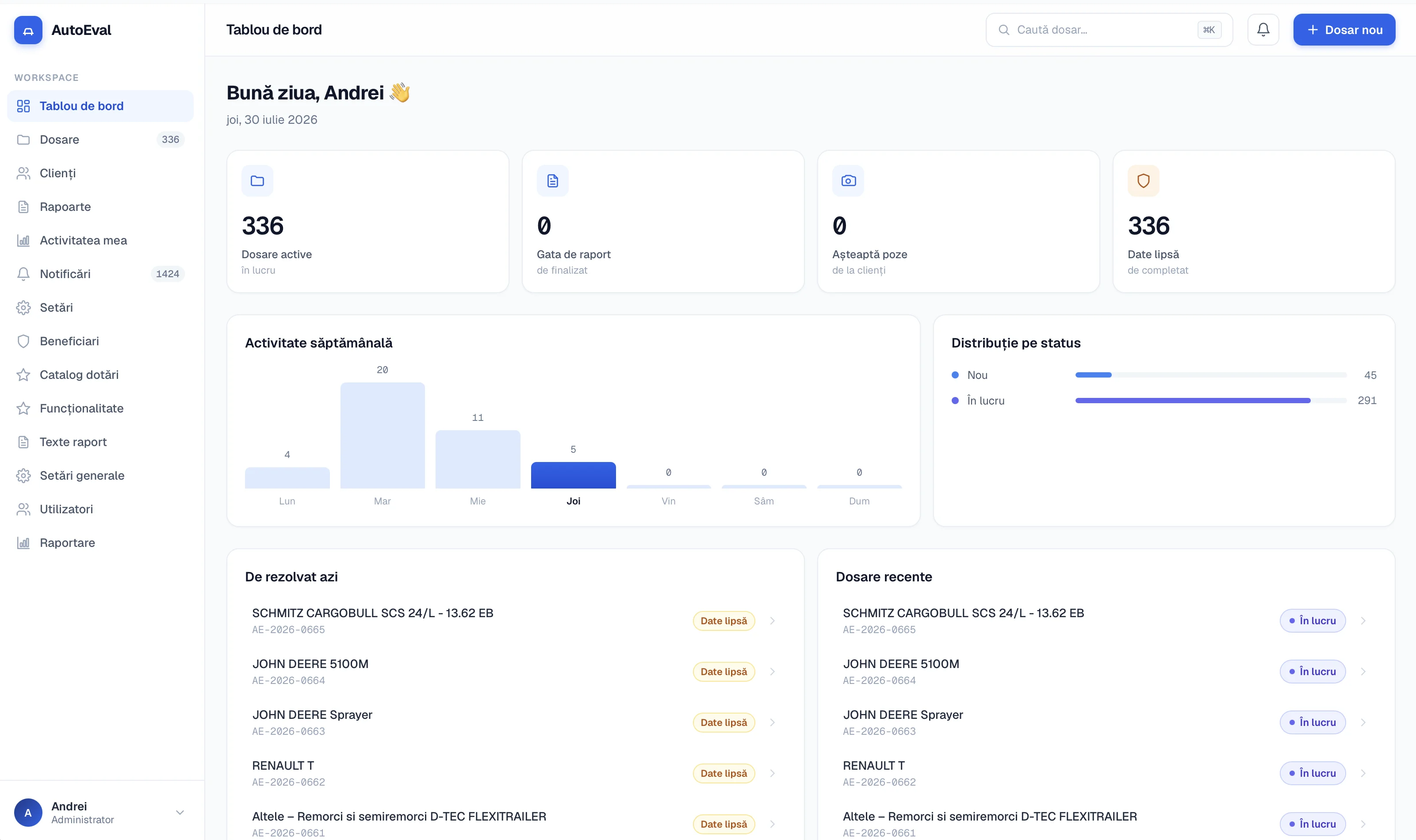
The starting point
Project context and objectives
Anteca works with vehicle and equipment valuations for leasing. Case files may cover lorries, semi-trailers and agricultural machinery, with technical data and photographs specific to each asset.
What the solution needed to do
- A shared case file for the asset’s data and photographs.
- Visibility of missing information and work progress.
- PDF generation from data and configurable text.
From problem to implementation
The challenges and how we addressed them
Documenting a valuation involves collecting information from the client, identifying missing items and preparing the report. When photographs, spreadsheets and documents are separate, the valuer must piece together the state of the case from several sources.
Scattered documents and photographs
Valuing an asset brings together photographs, technical data and information from several people.
Our approach
We organised the work around the case file, connecting the asset, client, documents and work status.
Cases held up by missing information
The valuer needs to know which photographs or data are missing before completing the report.
Our approach
Case statuses and tracking of collected materials highlight the areas that need completing.
Consistent report preparation
The collected data must be turned into a usable document, while the specialist retains responsibility for the conclusion.
Our approach
PDF generation uses case information and configurable text; the valuer validates the result.
UP2DATE’s contribution
What we implemented
UP2DATE built a web platform for Anteca organised around the valuation case file.
- The case file identifies the asset and client and is assigned a work status.
- Photographs, technical data and equipment details are collected within the case structure.
- Statuses highlight missing photographs or data.
- Configurable text and case data are used to generate the PDF report.
Roles for administrators, valuers, clients and report recipients support collaboration in the same system.
How the solution works
Case file
The asset and client are registered together.
Documentation
The required data and photographs are collected.
Report
Verified information is used in the PDF.
Solution components
Technologies and their role in the project
From the interface used every day to the data and integrations behind it.

PostgreSQL
The solution’s database.
Web application · Access roles
A shared workspace for administrators, valuers, clients and report recipients.
PDF generation · AI features
Support for the valuation workflow and report preparation using case data.
What becomes possible
Benefits for users and the organisation
The case file in one place
Technical data, photographs and documents remain linked to the same asset.
Visible priorities
The team can see the work status and the information that still needs completing.
A report built from collected data
PDF preparation reuses the case file and configurable text, with final validation by the valuer.
Let’s start with your situation
Working on a project in a similar context?
Tell us what you want to improve, who uses the solution and which systems are already in place.